


What Is the Difference Between a Level 2 and Level 3 Survey?
Key summary
- A Level 2 survey is usually suitable for relatively modern properties, of standard construction, and which are in reasonable condition.
- A Level 3 survey is our most detailed service and is recommended for older, extended or complex properties.
- The Level 2 report covers the essential elements, but is a little more brief in its explanation of remedies to defects and maintenance advice.
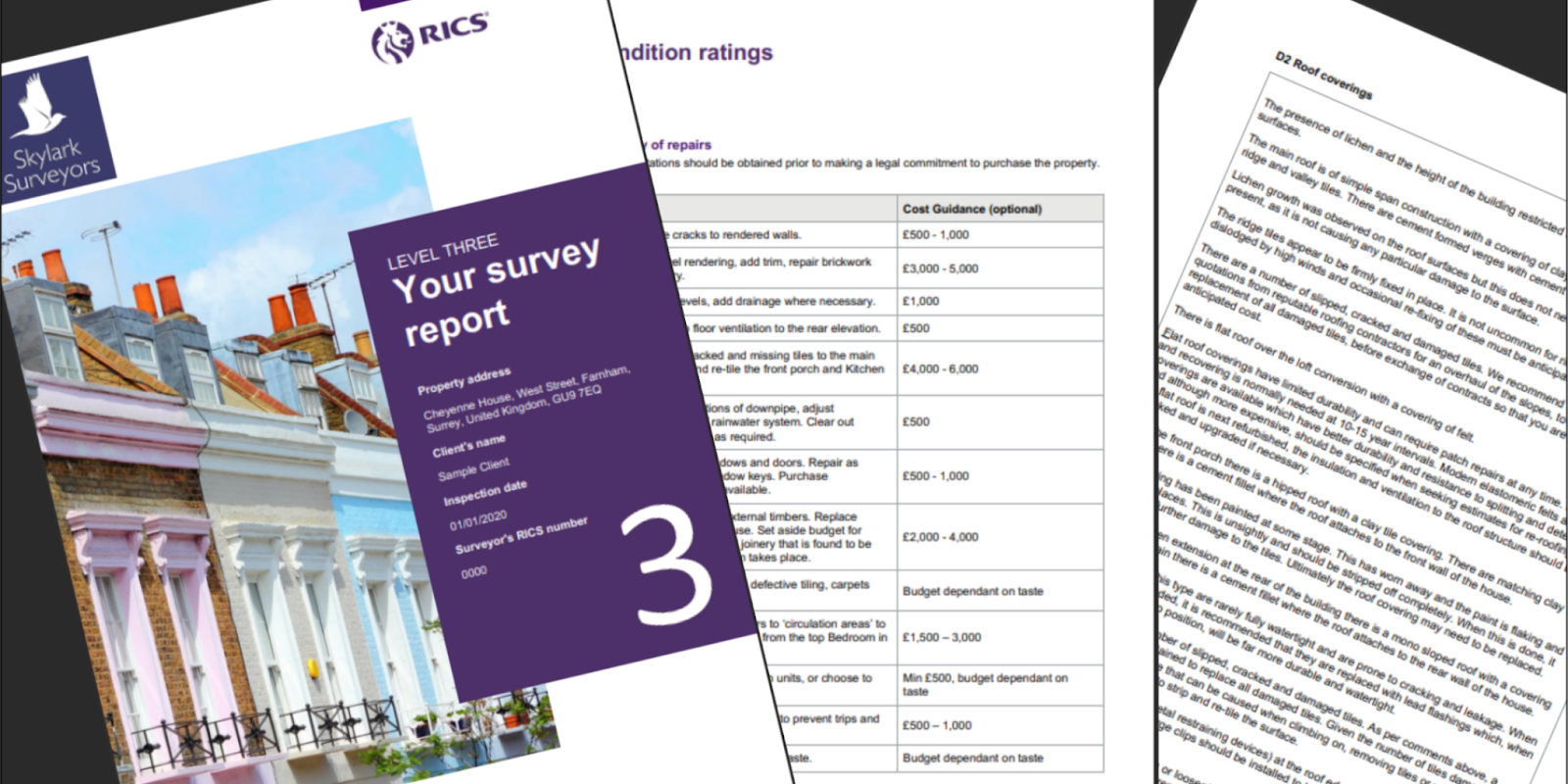
- The Level 3 survey report provides additional advice about energy efficiency, maintenance of the property in future, and perhaps most useful is a costed summary detailing budget costs for the major repairs required to the building.
- The right choice depends on the age, condition and risk profile of the property you are buying. We would be happy to advise in this regard if you would like an impartial conversation about the property you are looking to purchase.
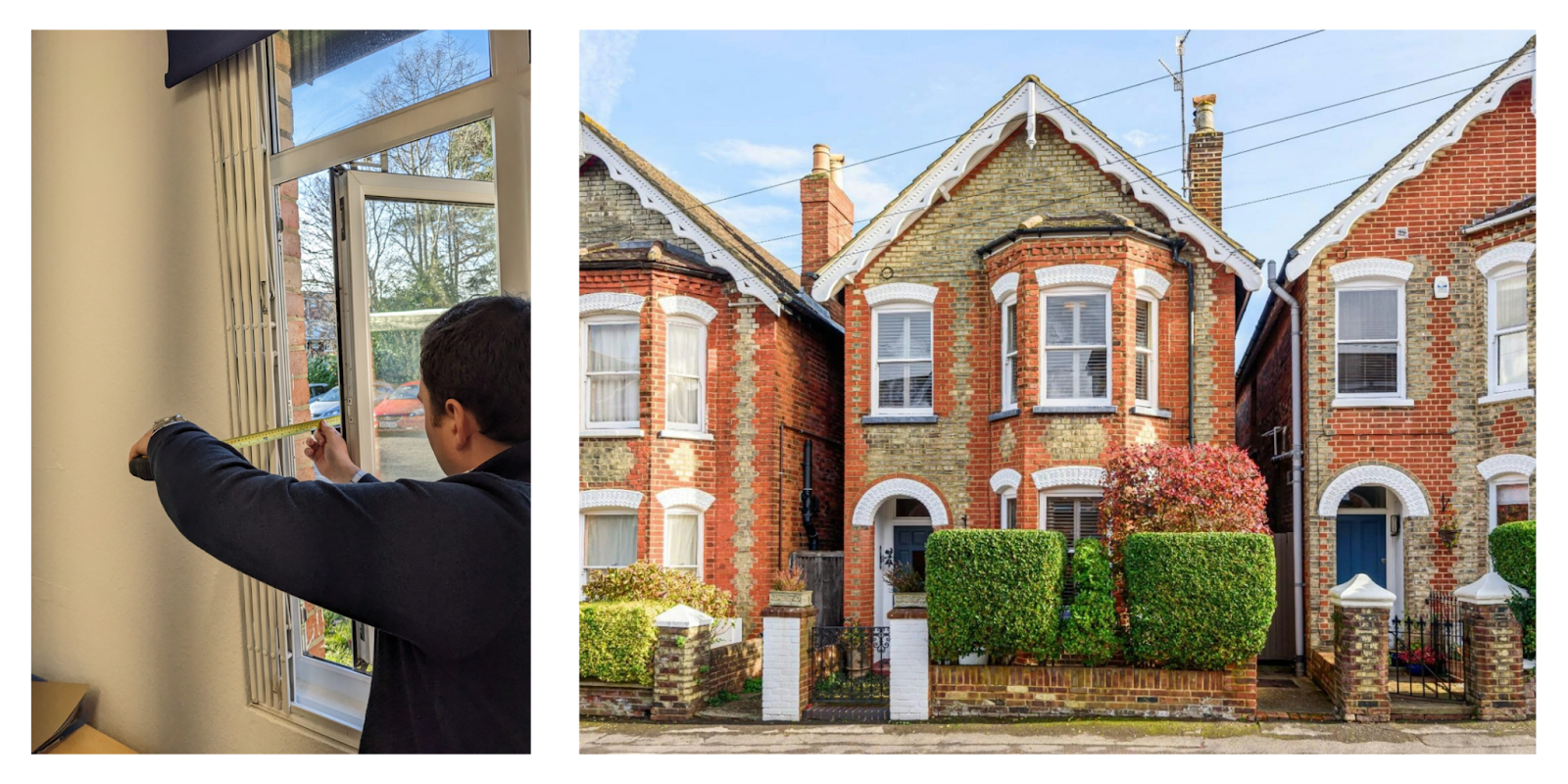
Understanding the difference between a Level 2 and Level 3 survey
When you are buying a property, choosing the right survey is one of the most important decisions you will make. Many home buyers have heard the terms Level 2 and Level 3 survey but are not sure how they differ or which one is appropriate for their situation.
At Skylark Surveyors, we work with buyers across West Surrey, East Hampshire and Berkshire who want clear, straightforward advice before they commit to a purchase. Our role as independent RICS surveyors is to explain the options in plain English so you can match the survey level to the type of home you are buying.
This guide explains what each survey involves, how the reports differ and how a level 2 and level 3 survey can protect you from unexpected costs later on.
What is a Level 2 survey?
A Level 2 survey, often called a homebuyer survey, is designed for properties that are relatively modern, of standard construction and appear to be in reasonable condition. It provides a balanced report on the condition of the property, and highlights issues which may affect value or require attention, without going into the depth reserved for older or more complex homes.
What a Level 2 house survey typically includes
During a Level 2 house survey, your surveyor will carry out a visual inspection of all reasonably accessible parts of the property. The report usually includes:
- An assessment of the general condition of the property inside and out.
- Identification of visible defects such as cracks, damaged roof coverings or failed render.
- Comments on damp, insulation and ventilation where these can be assessed without opening up the structure.
- A visual overview of services such as electrics, heating, plumbing and drainage.
- A colour coded condition rating system so that urgent items are easy to spot.
- A straightforward summary of the main risks and recommendations.
The inspection is non intrusive. The surveyor will not lift up floorboards, move heavy furniture or open up walls, so there are limits to what can be seen. For modern, straightforward homes, however, a Level 2 homebuyer survey usually provides enough reassurance to proceed with confidence.
If you are considering this type of report, you can find more detail on our dedicated Level 2 homebuyer survey page.
What is a Level 3 survey?
A Level 3 survey, sometimes known as a building survey, is the most comprehensive service we offer. It is intended for older properties, homes that have been extended or altered, and buildings constructed using traditional or non standard methods.
When a Level 3 building survey is recommended
In our experience, a Level 3 building survey is usually the best choice when the property is:
- An older or period home.
- Showing signs of wear, movement, damp or deterioration.
- Previously extended, reconfigured or extensively renovated.
- Built using non standard construction methods or materials.
- Being purchased with significant renovation or remodelling in mind.
What a Level 3 survey includes
A Level 3 survey contains everything that would be expected from a Level 2 inspection, but it goes into greater detail about each element. The surveyor will spend more time at the property and will inspect wherever it is safe and reasonable to do so. The report usually provides:
- A detailed inspection of main walls, roofs, floors and foundations where visible, detailing any structural issues.
- Assessment of the roof space and other concealed areas where access can be gained.
- Investigation for any signs of building movement, such as cracking or distortion, together with likely causes.
- Thorough checks for damp, timber decay, rot and possible insect attack.
- Commentary on the construction materials used and how they are likely to perform in the long term.
- Clear advice on necessary repairs, provided in a costed list, and advice on potential future maintenance.
- Technical explanations set out in everyday language so that you can understand the implications.
The outcome is a thorough survey report that gives you a detailed picture of the property and helps you plan both immediate works and longer term maintenance.
For buyers considering older cottages, Victorian terraces, large detached properties or homes that have been significantly altered, a Level 3 building survey offers the most complete offering.
You can learn more about this service on our Level 3 building survey page.
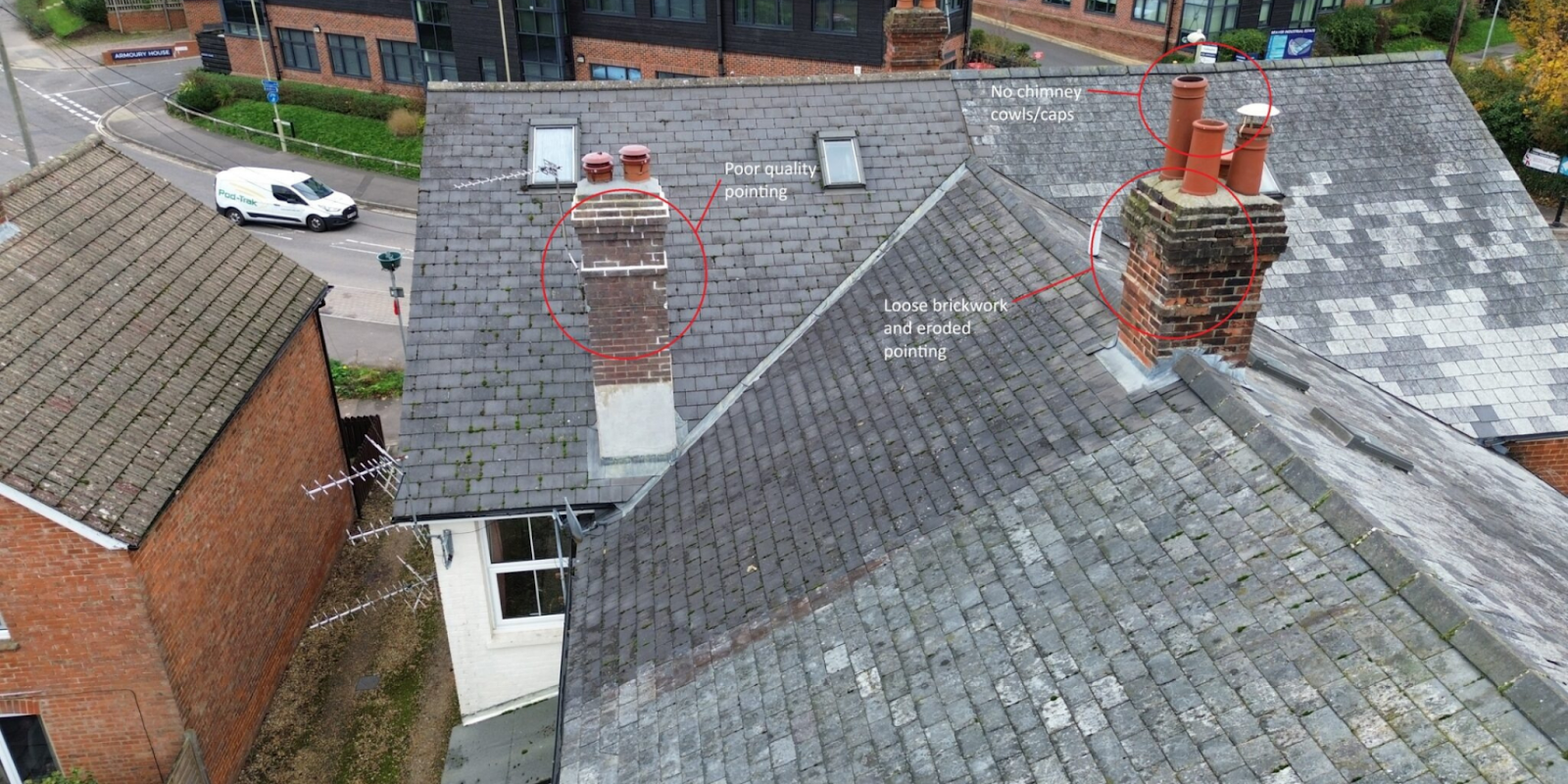
Level 2 and Level 3 survey: key differences
The main differences between a Level 2 and Level 3 survey are outlined below:
1. Depth of inspection
A Level 2 survey focuses on visible and readily accessible areas. It is ideal for giving a clear overview of the condition of the property.
A Level 3 survey goes further, looking at the structure in more detail, exploring accessible voids and providing a deeper analysis of risks and defects.
2. Type of property
A Level 2 survey is usually suitable for modern houses and flats of standard construction where no major problems are expected.
A Level 3 survey is aimed at older, larger, altered, or complex buildings, where issues such as damp, movement or traditional construction methods may be present.
3. Reporting detail
A Level 2 report offers a concise overview with condition ratings and a short summary that highlights key issues.
A Level 3 report is more descriptive. It explains defects in context, discusses their significance and sets out options for repair and maintenance.
4. Repair and maintenance guidance
Level 2 surveys will advise where repairs are required, and flag where further investigation is needed.
Level 3 surveys include more in depth commentary on what needs to be done, how soon and what the long term implications might be if works are delayed.
5. Cost and time
A Level 3 building survey takes longer on site than a Level 2 survey because it involves a more detailed inspection. This is reflected in the fee. In many cases, however, the additional insight can save buyers significant sums by helping them understand what costs they might expect for repairs, which could be used to renegotiate the price or avoid unsuitable properties.
Which survey should you choose?
Many people ask what survey they should get when buying a house, especially when they have narrowed their choice down to a Level 2 or Level 3 survey. The right option depends on the particular property rather than simply the buyer’s preference.
Choose a Level 2 survey if the property is:
- Built within the last few decades.
- Of standard construction.
- Appears to be in good condition with no obvious signs of movement or damp.
- Has not had significant alterations or extensions.
In these cases a Level 2 survey for house purchase will normally provide enough assurance and is often the most cost effective choice.
Choose a Level 3 survey if the property is:
- An older property, particularly period or listed buildings.
- Showing signs of wear, cracking, roofing issues or long term damp problems.
- Extended, converted or extensively renovated.
- Built using non standard methods, such as timber frame or concrete systems.
- Being bought with major renovation or refurbishment in mind.
In these situations a Level 3 building survey is usually worth the extra investment, as it provides a detailed understanding of the property condition and likely future costs.
Why the right survey choice matters
The survey you choose is a key part of managing risk when you buy a home. A property can look attractive during a viewing yet hide significant issues within the structure or services. A well chosen survey helps you:
- Avoid unexpected repair bills after completion.
- Consider whether you are happy with the purchase price if serious defects are identified.
- Plan ahead for maintenance and improvement works.
- Decide whether the property is right for you in the long term.
For buyers in areas such as Guildford, Farnham, Godalming, Wokingham and the surrounding towns, where housing stock ranges from new developments to historic properties, selecting the appropriate survey level is particularly important.
The Royal Institution of Chartered Surveyors sets the professional standards behind each type of RICS home survey. If you would like to read more about how these levels are defined, you can review the RICS home survey guidance in more detail.
It can also be helpful to understand how surveys fit into the wider buying process. The UK Government guidance on buying or selling your home provides a useful overview of the steps involved and the decisions you will need to make.
Frequently asked questions
What is the difference between Level 2 and Level 3 surveys?
A Level 2 survey provides a visual, non intrusive overview of the property condition and is suited to modern, straightforward homes. A Level 3 survey is a more detailed inspection that looks deeper into potential issues and is recommended for older, altered or complex properties.
What survey should I get when buying a house?
The right survey depends on the age, construction and condition of the home. As a general guide, modern standard construction properties usually suit a Level 2 survey, while older or more complicated buildings are better served by a Level 3 building survey. If you are unsure, our team can advise based on the specific property you are considering.
Does a Level 3 survey check for damp?
Yes. A Level 3 survey includes a thorough assessment of damp, including rising damp, penetrating damp and condensation. The report will explain where damp is present, how serious it is likely to be and what further action is recommended.
Is a Level 3 survey worth it for older homes?
Older homes often have hidden structural or maintenance issues that are not immediately obvious during a viewing. A Level 3 survey provides a detailed survey report that helps you understand these risks and plan for repairs or improvements.
Does a survey include valuation?
A Level 2 or a Level 3 survey can include a valuation if this is requested at the outset. The valuation will provide an independent view of the market value, which can be helpful when confirming that the agreed purchase price is reasonable.